

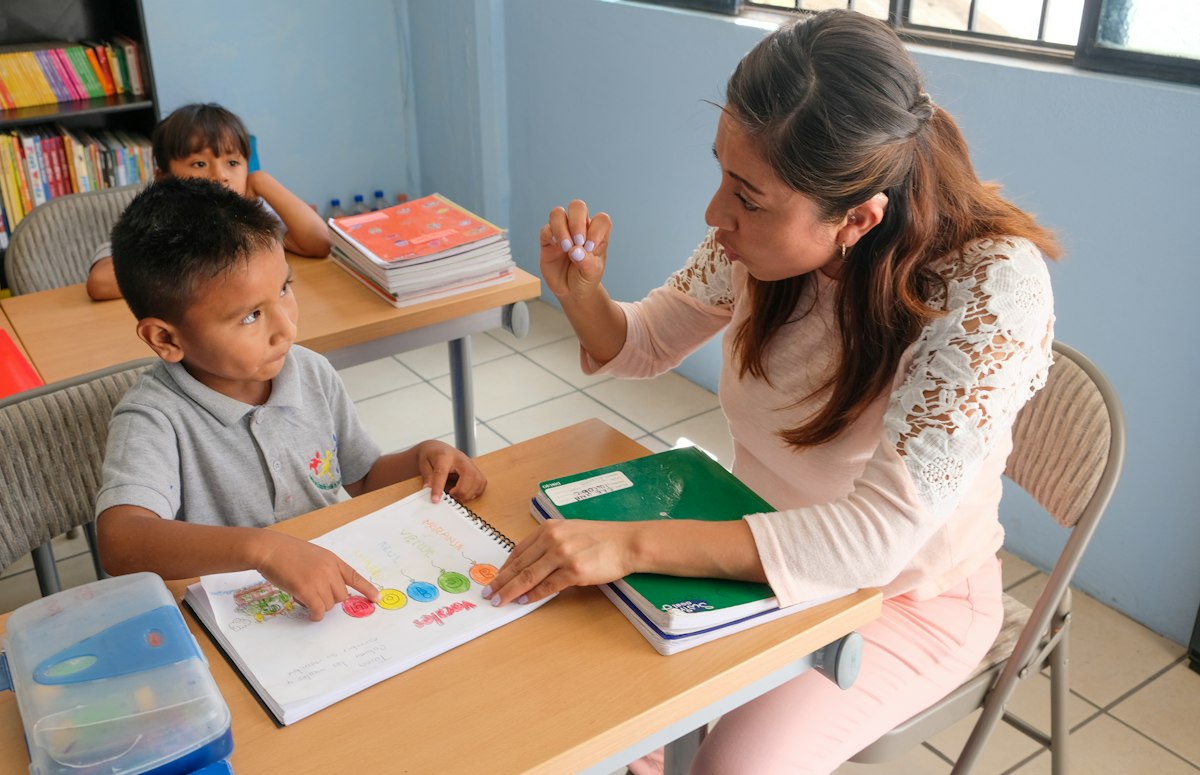
Most parents have said “Were you even listening?” at least once. Usually the answer is a sheepish grin and a child who was too busy with their Lego to hear.
For some children, though, the problem runs deeper. They hear the words, but they don’t fully understand them.
Perth’s City Beach Speech is a mobile paediatric speech pathology practice that assesses and supports children with language delays and disorders at home or school. Its language page describes how a child who hasn’t understood may simply seem not to be listening, which is a pattern many families will recognise.
Understanding words and using words
Speech pathologists usually split language into two areas.
Receptive language is understanding. It covers following instructions, answering questions and making sense of stories and conversations.
Expressive language is using words. It covers putting sentences together, explaining ideas and finding the right word when you need it.
A child can have trouble with one area or both. Difficulties with understanding are often harder to spot, because children can be very good at covering them up.
Why understanding problems get missed
Children are clever at filling gaps. They watch what other kids do, follow familiar routines and pick up clues from your face and tone of voice.
Picture a child told “Shoes on, then grab your bag and wait by the door.” They put their shoes on, because they saw the shoes. The rest of the instruction got lost.
From the outside, this can look like daydreaming, cheekiness or a short attention span. Teachers may describe the same child as distracted.
Signs you might notice at home
Signs may include:
- Trouble following instructions with two or three steps.
- Answering a different question to the one you asked.
- Short or simple sentences for their age.
- Leaning on words like “thing” and “stuff” when they can’t find the right word.
- Frustration or meltdowns when they can’t get their message across.
Signs teachers might notice
At school, language difficulties can show up as:
- Trouble following class instructions or keeping up with group discussions.
- Difficulty retelling an event or a story in order.
- Good ideas that don’t make it onto the page in written work.
- Being described as distracted or not listening.
None of these signs on their own mean something is wrong. A pattern that keeps showing up over time is worth a closer look.
Language delay and language disorder
A language delay means a child is reaching milestones, but more slowly than expected. Many children with a delay catch up, often with some support.
A language disorder is more persistent. It needs careful assessment and can continue into adulthood. When there is no other known cause, such as hearing loss or autism, it may be called Developmental Language Disorder, or DLD.
Only a qualified professional can assess this properly. Speech Pathology Australia is the national peak body for speech pathologists and has information on what they do and how to find one.
Children who speak two languages
Learning two languages does not cause a language delay. Bilingual children may mix words from each language for a while, and that is normal.
If a child has trouble in both languages, it is worth getting checked.
Simple things you can try at home
These habits help most children, so there is no harm in trying them before you know whether there’s a difficulty.
- Get your child’s attention before you speak. Say their name and wait for them to look at you.
- Break instructions into smaller chunks. Give one step, wait for it to happen, then give the next.
- Show as well as tell. Point, gesture or hold up the item you’re talking about.
- Ask your child to tell you what they need to do, rather than asking “Do you understand?”
- Slow down a little and leave pauses between ideas.
Keep an eye on what works. If shorter, clearer instructions make a big difference, that is useful information to share with a teacher or speech pathologist later.
Work with your child’s teacher
Teachers see your child in a busy, noisy room that is very different from home. They can tell you whether instructions seem to go astray in class.
Share what you notice at home too. Small changes can help, like writing steps on the board or quietly checking in with your child after giving the class a task.
Rule out hearing problems
Hearing is one of the first things to check when a child seems not to listen. Ear infections and fluid behind the eardrum are common in young children and can come and go.
Your GP can look in your child’s ears and arrange a hearing test if needed. It is a simple step that can rule out a common cause.
How speech therapy usually works
Speech therapy for language difficulties starts with an assessment of how a child understands and uses language. Goals are then set with the family, ideally linked to everyday life, such as following class instructions or joining in with friends.
Younger children often work through play and books. Older children may work on skills linked to their schoolwork. Parents usually receive strategies to use in daily routines, and with permission the therapist may also work with the child’s teacher.
How language difficulties can affect behaviour
When a child can’t follow what’s going on, or can’t explain how they feel, it can come out as behaviour. Some children act up, withdraw or refuse to do tasks they find confusing.
This is easy to read as defiance. It may simply be a child who doesn’t know what was asked of them, or who lacks the words to say so.
Children with language difficulties can also find friendships harder. Fast playground chat, jokes and games with changing rules all lean heavily on language skills.
If you notice your child often plays alone or gets upset after time with friends, mention it to their teacher. It may be part of the same picture.
Next steps for parents
If your child often seems not to listen, try a few of the strategies above for a couple of weeks. Notice whether they help.
Have a chat with their teacher about what they see at school. If the concerns stay, book a hearing check through your GP and talk to a speech pathologist about an assessment.